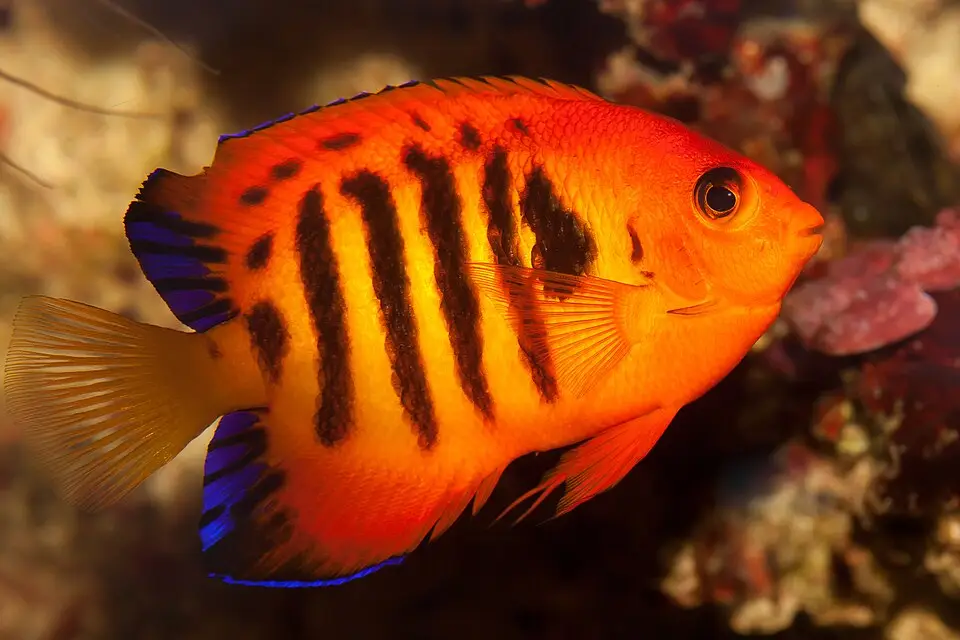
Flame angelfish
Centropyge loriculus · Pomacanthidae
Also known as Flaming angelfish
Intermediate
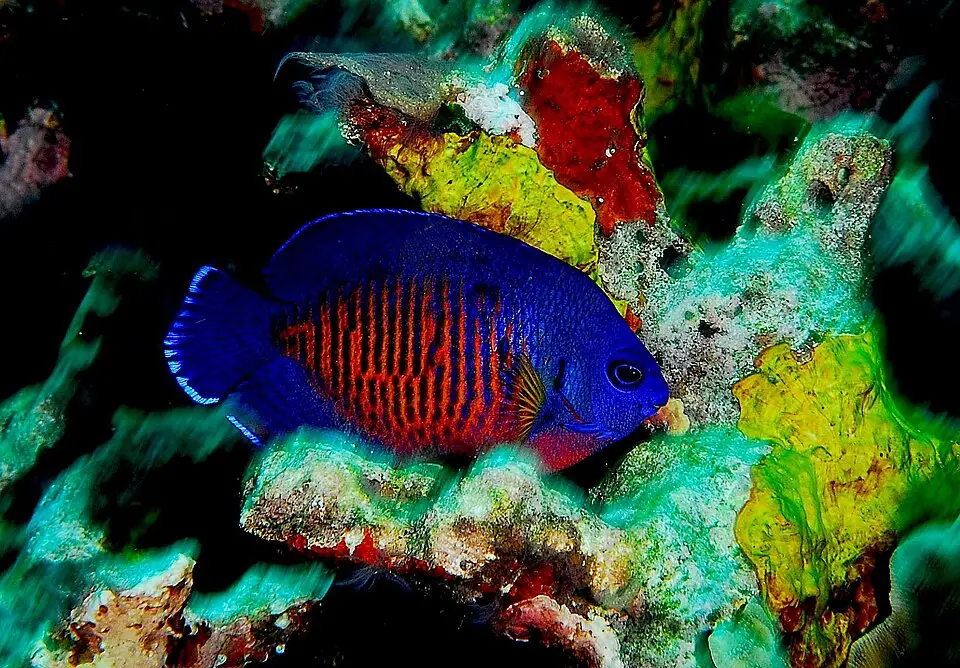
Vivid red-orange with black bars — the showpiece dwarf angel, slightly bolder with corals.
In short: A flame angelfish needs at least 150 L (40 US gal), water at 24–28 °C (75–82 °F) and pH 8.1–8.4. It is semi-aggressive, usually kept singly, and rated intermediate to keep.
Updated
- Minimum tank
- 150 L (40 US gal)
- Temperature
- 24–28 °C (75–82 °F)
- pH
- 8.1–8.4
- Adult size
- 10 cm (3.9 in)
- Group size
- 1+
Reef & marine husbandry
- Specific gravity
- 1.023–1.026
- Reef safety
- Reef safe with caution
- With corals
- Often nips zoanthids, LPS and clams.
- With inverts
- Safe with shrimp and snails.
- Minimum in a mixed reef
- 150 L (40 US gal)
- Minimum fish-only (FOWLR)
- 150 L (40 US gal)
- Aggression
- Territorial towards similar angels.
- Feeding
- Two to three feeds daily.
Care requirements
- Minimum tank volume
- 150 L (40 US gal)
- Temperature
- 24–28 °C (75–82 °F)
- pH
- 8.1–8.4
- Hardness
- 8–12 dGH
- Lifespan
- 5–12 years
- Diet
- Omnivore — angel formula with sponge, nori, mysis, pellets.
- Care level
- Intermediate
Origin & habitat
- Native region
- Central and western Pacific
- Water type
- Saltwater
- Biotope
- Coral-rich reef slopes
- Natural conditions
- Mature rock, moderate to strong flow.
Behaviour & stocking
- Temperament
- Semi-aggressive
- Minimum group
- 1 fish
- Swims
- All levels
- Good tank mates
- TangsClownfishWrasses
- Avoid
- Other Centropyge angels
Breeding & difficulty
- Breeding difficulty
- Advanced
- Sexing
- Males grow larger.
- Notes
- Bred commercially in small numbers only.
- Common ailments
- Marine ichInternal parasites
Will it fit your tank?
Sign in and AquaLog compares Flame angelfish against every tank you track — volume, water type, temperature and pH — then adds it to your livestock in one tap.
Sign in to check my tanks