How to keep an aquarium warm in winter in India
AquaLog guide · Published
In short: In Delhi, Punjab, UP, Rajasthan and the hill states, tropical fish need a heater from about November to February. Size it for your coldest room reading with the heater size calculator, keep a lid on, and check a thermometer morning and evening. Cold-water fish such as white cloud minnows cope without one only while the room stays at 16 °C (61 °F) or above.
How cold does a North Indian winter get?
Cold enough to matter. India Meteorological Department (IMD) normals for 1991–2020 put the average January night low at 7.5 °C (45.5 °F) at Delhi's Safdarjung, 7.8 °C (46 °F) at Lucknow, 8.4 °C (47 °F) at Jaipur and 3.8 °C (39 °F) at Amritsar. Cold waves go lower: Safdarjung fell to 4.3 °C (40 °F) on 16 January 2026.
Rooms stay warmer than outside, but not warm enough for tropical fish. In a winter study of flats in Roorkee and Chandigarh, with nights outside at about 5–7 °C, the lowest indoor reading was 15.2 °C (59 °F). Older, draughty or ground-floor rooms and hill-state homes can be colder, so measure your own room before you plan.
Which fish need a heater, and which cope without one?
Compare the lowest temperature in each fish's range with your coldest room reading. These ranges come from our care guide:
| Fish | Temperature range | In an unheated room near 15 °C |
|---|---|---|
| Betta | 24–30 °C (75–86 °F) | Needs a heater |
| Molly | 24–28 °C (75–82 °F) | Needs a heater |
| Dwarf gourami | 24–29 °C (75–84 °F) | Needs a heater |
| Guppy | 22–28 °C (72–82 °F) | Needs a heater |
| Neon tetra | 21–27 °C (70–81 °F) | Needs a heater |
| Platy | 20–27 °C (68–81 °F) | Needs a heater |
| Zebra danio | 18–26 °C (64–79 °F) | Needs a low setting in the coldest weeks |
| Rosy barb | 18–25 °C (64–77 °F) | Needs a low setting in the coldest weeks |
| White cloud mountain minnow | 16–24 °C (61–75 °F) | Copes if the room stays at 16 °C or above |
| Fancy goldfish | 16–23 °C (61–73 °F) | Copes if the room stays at 16 °C or above |
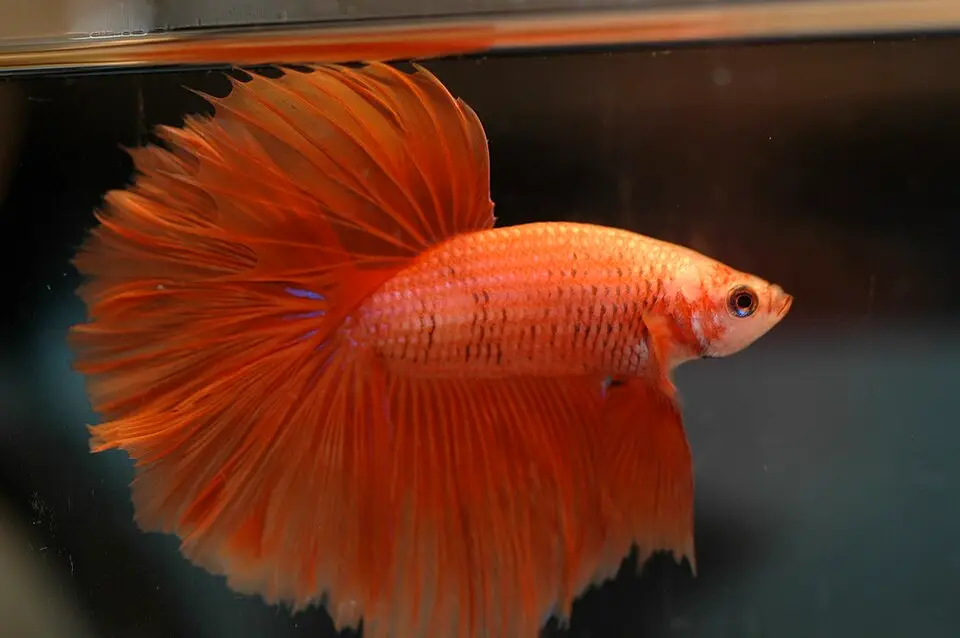
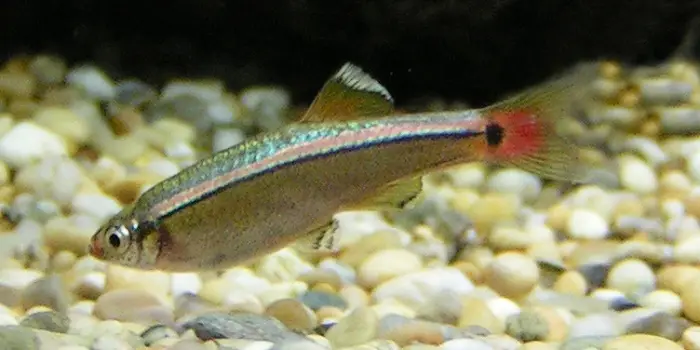
A cold-water fish still benefits from a small heater set to its minimum as a safety net on cold-wave nights. Never keep cold-water and tropical fish together to save on a heater: set for one, the tank is wrong for the other. See cold-water fish for the full list.
What size heater do you need for winter?
More than the summer rule of thumb. About 1 W per litre is JBL's figure for warming water 5 °C above the room; a North Indian winter often needs a lift of 10 °C or more. The heater size calculator works from JBL's two examples (1 W per litre for a 5 °C lift, 200 W for 100 litres lifted 15 °C), which come to roughly 0.13–0.2 W per litre for each degree. With a lid and the water at 26 °C (79 °F), it suggests:
| Tank | Room at 15 °C (59 °F) | Room at 10 °C (50 °F) |
|---|---|---|
| 60 L (16 US gal) | 100 W | 150 W |
| 100 L (26 US gal) | 200 W | 300 W |
Don't buy a much stronger heater to be safe: JBL warns that an oversized heater in a small volume may not switch off quickly enough. From about 200 litres the calculator splits the load over two heaters, as JBL suggests, so one stuck heater can't cook or chill the tank on its own.
Which heater type is safest?
- Glass heater with a built-in thermostat. The usual choice for home tanks. Check the dial against a separate thermometer, because dial markings can be off.
- Titanium heater. Sold as unbreakable, which suits large or boisterous fish, but many models have no thermostat of their own and must run through a separate temperature controller.
- Heater guard. A plastic cage around the heater stops large fish knocking it and keeps resting fish off the hot tube. Worth having with big cichlids, plecos or goldfish.
Whatever you buy, follow its manual. Fluval's heater instructions, for example, say:
- Keep the water between the heater's minimum and maximum marks, and top up evaporation so the level never drops below it.
- After placing it in the tank, wait 30 minutes before plugging it in so the glass matches the water temperature.
- Give the cord a drip loop: let it hang below the socket so water runs off the low point, not into the plug.
- Unplug it for water changes, and wait 30 minutes after unplugging before lifting it out.
Never run a heater in a dry or half-empty tank; the Merck Veterinary Manual says not to plug one in until the tank is full. A residual-current device (RCD) on the aquarium sockets adds protection; ask an electrician.
Where should the heater go?
Put it where water moves past it, such as near the filter outlet or intake, so the warmth spreads through the tank. Fluval's manual says to leave free circulation around the tube and keep gravel and decorations from touching it. Mount it at an angle or upright, fully covered at the lowest water level you expect. Place the thermometer at the opposite end, so you read the coldest part of the tank, not the water next to the heater.
How do you keep the heat in?
- Keep the lid on. JBL puts an open top at about 1–2 °C of evaporative cooling, and Fishkeeper notes most heat escapes through the top.
- Insulate the back and sides. A sheet of polystyrene or foam behind and beside the tank cuts heat loss through the glass; leave the front clear for viewing.
- Choose the room. Move a tank away from outside walls, windows, doors and the floor of a cold ground-floor room before winter, never while it is full.
- Avoid room heaters close by. A blower or oil heater beside the tank causes swings; keep the tank's own heater in charge.
What happens to the temperature in a winter power cut?
The water cools slowly, but it does cool. Heat loss follows the gap between the water and the room, so using JBL's heater figures, a 26 °C tank in a 15 °C room loses roughly 1–2 °C (2–4 °F) in the first hour, then less as the gap narrows. The University of Florida's extension vet notes that larger tanks hold their temperature longer than small ones.
- Keep the lid closed and wrap the tank in a blanket or towels, concentrating on the top, as Fishkeeper suggests. Leave a gap for the air pump line.
- For a small tank, Fishkeeper suggests a sealed bottle of hot water floating on the surface.
- Keep oxygen going with a battery air pump; oxygen still runs short first.
- Running a heater on an inverter or UPS is costly: a 100 W heater for 4 hours can take up to 400 Wh. Our power cut plan shows how to size backup and restart a filter safely.
When the power returns, let the heater bring the temperature back on its own. Don't pour in hot water: the University of Florida's vet advises changing temperature gradually, about 0.5–1 °C (1–2 °F) every few hours.
How do you check that the tank is warm enough?
Read a separate thermometer twice a day through December and January: first thing in the morning, when the room is coldest, and in the evening. If the morning reading sits below your fish's range while the heater is on, the heater is too small or failing. If the evening reading climbs above the setting, the thermostat may be stuck on: unplug it and replace it. AquaLog can log each reading so you can see a slow slide over a cold week; start a log.
What are the signs of cold stress?
- Fish slow down, hang near the bottom or sit in one corner.
- They eat less or ignore food.
- Fins are held close to the body.
- Tropical fish crowd near the heater.
Water temperature drives everything a fish's body does, the Merck Veterinary Manual notes, so cold fish digest slowly: feed less until the tank is back in range. Check the thermometer first, then raise the temperature slowly. If fish still look unwell once the water is back in range, test ammonia and nitrite (see aquarium water parameters explained) and ask a vet or an experienced aquarist before using any treatment. In spring, the same tank may need the opposite: see how to cool an aquarium in summer.